
M2 - Learner Manual
11. Aboriginal Rights and Civil Rights
Boxer Jack Johnson, who claimed victory in Sydney for the world title in 1908, was Inspired and supported by American civil rights activists. This in turn inspired early Aboriginal activists such as William Ferguson and Jack Maynard. This saw a growing civil rights movement in Australia, especially after the WWI when more and more Aboriginal people came off the land and into cities. Encouraged by their inclusion in the war and buoyed by the chance to make a better life for themselves and their families.
This movement gained momentum, cumulating in the late 1950s where Aboriginal and non-Aboriginal activists came together to look at ways they could support better conditions for Indigenous Australians and repeal laws that restricted and deprived Indigenous Australians of their civil rights.
'Fights for Civil Rights' is an account of seven keys civil rights campaigns and the activists and organisations that participated in them. It begins with the Warburton Ranges campaign in the 1950s. The film about conditions of Aboriginal people in the Warburton Ranges was used as a rallying point for civil rights activists Aboriginal and non-Aboriginal and a call for justice and action. Working its way through to the push for 1967 Referendum, which was an accumulation of a ten-year campaign by civil rights activists to make this happen.
Twenty-six people attended this meeting, which formed the Federal Council for Aboriginal Advancement, including the three Aboriginal delegates and Bill Onus, an Aboriginal observer, representing the Australian Aborigines' League.
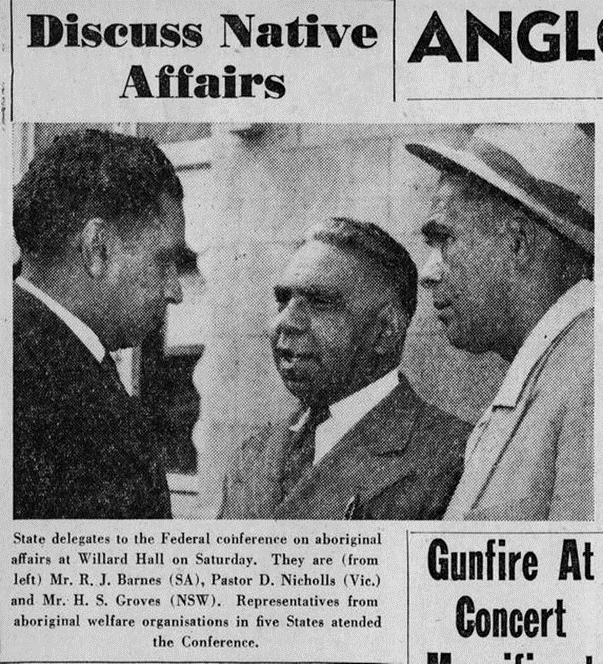
Aboriginal delegates Jeff Barnes, Doug Nicholls and Bert Groves, The Advertiser, Adelaide, 17 February 1958